The prediction engine
behind the savings
A closed-loop system that reads your facility's patterns, forecasts 48 hours ahead, and writes optimized schedules before demand spikes hit your bill.
Three data streams. One 48-hour kWh forecast. Rewrites your BMS schedule before each shift.
The model is not a black box. Here is what it reads, what it produces, and what gets written to your BMS — and when.
We pull 48-hour NWS and regional weather data every hour — dry-bulb temperature, humidity, cloud cover, and wind speed. These are the primary drivers of HVAC load variance day-over-day.
Your historical occupancy schedule — shift times, meeting density, weekend vs. weekday patterns — is combined with real-time calendar signals to predict actual building population for each hour.
Six months of your facility's interval meter data teaches the model your equipment's thermal response profile, peak demand patterns, and the relationship between outside conditions and internal load.
Model Output
48-hour kWh load forecast per equipment group — refreshed every hour and used to generate pre-shift schedule parameters for HVAC, lighting, and machinery.
We read from your BMS. We write only to schedule parameters. We do not replace anything.
Voltpathio connects over BACnet, Modbus, or MQTT — whatever your BMS speaks natively. No new hardware, no PLC reprogramming, no network changes beyond a single outbound HTTPS port.
Utility API connections enable real-time spot price feeds for demand charge optimization. Our read-write gateway installs on your network in under 2 hours with no firewall changes required beyond a single outbound HTTPS port.
Every automated schedule change is logged with a reason code and outcome
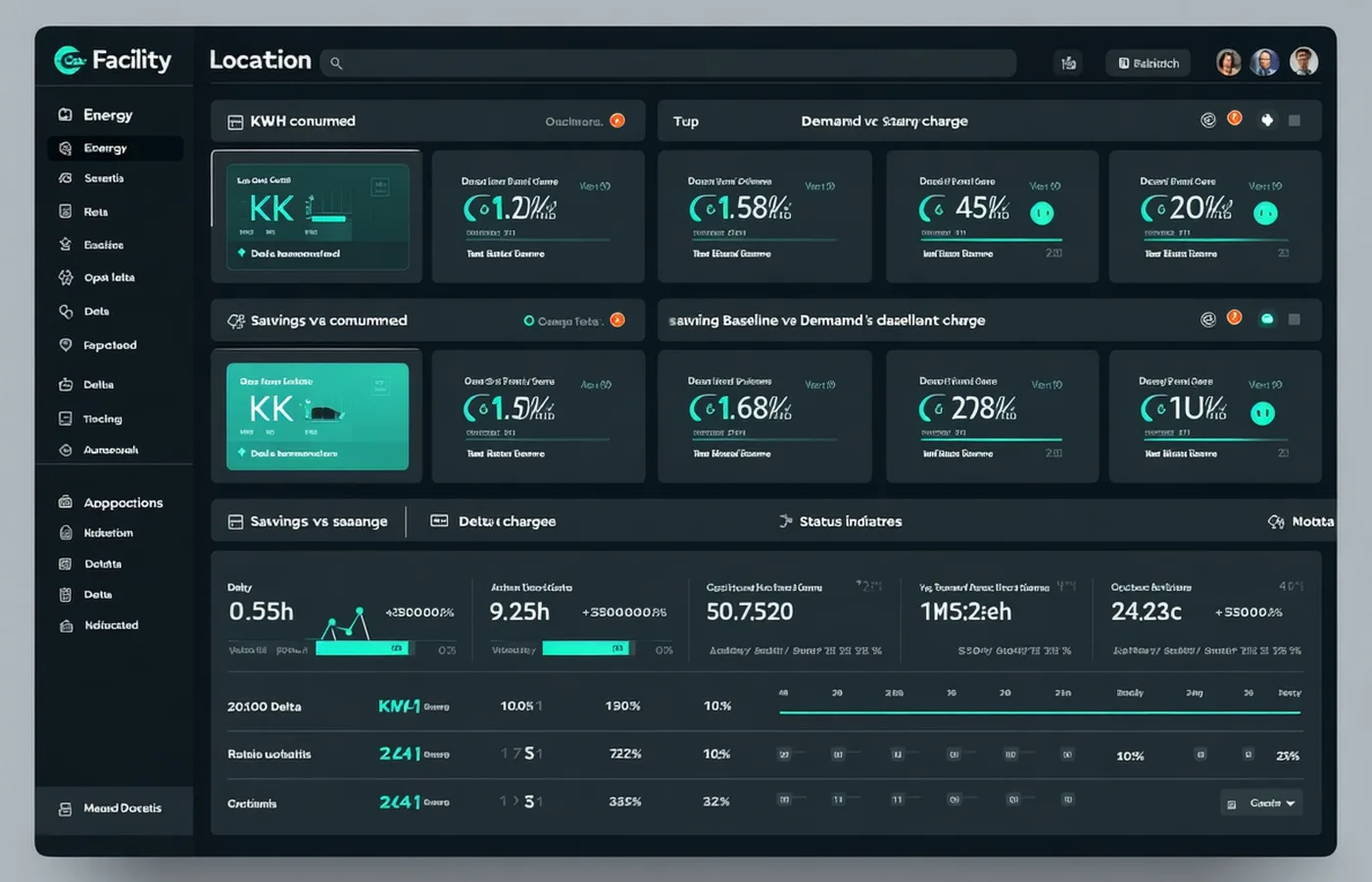
Your monitoring dashboard shows real-time savings, forecast vs. actual comparison, and the full schedule change history — so your facilities team always knows exactly what ran and why.
Read-only to your BMS. Write-only to schedule parameters you explicitly authorize.
Data stays in your facility's network. We read telemetry — we do not store raw operational data off-site. We are not a fault detection tool, an SCADA system, or a PLC reprogrammer. We add a prediction layer on top of what you already run.
We write only to BMS schedule parameters — the same values your facilities team adjusts manually. We do not touch control logic, setpoint ranges, or safety overrides.
A lightweight gateway appliance sits on your network and handles BMS communication locally. Only aggregated schedule parameters and summary telemetry leave the building — not raw equipment data.
Any automated schedule change can be rolled back from the dashboard in one click, or by calling support. Your original schedule parameters are always preserved and restorable.
All communication between the gateway and our platform uses TLS 1.3. API credentials are rotated quarterly and stored in an isolated secrets manager, not in application code.
Every schedule write is logged with timestamp, reason code, operator (human or automated), and outcome delta. Logs are immutable and retained for 24 months.
Prefer a human-in-the-loop? Enable approval mode and all schedule changes queue for your review before execution. You approve individually or in batch — the system waits.
See the model run on your facility's data
We build a custom consumption profile for your building before the demo call — so you see real numbers, not generic estimates. 30 minutes. No commitment.